Should you buy gold in the UK or India? Compare VAT, GST, import duty, hallmarks and carrying gold to India, for jewellery, coins and bars.
Tax and customs rules change, so confirm the figures on gov.uk and Indian government sources before buying. This is general information, not financial or tax advice, and this post contains no affiliate links.
Gold has one price on the screen and a different one on the bill. The gap is made of tax, duty, making charges and what you do with the gold afterwards, and those work very differently in the UK and in India.
For many Indian families, gold is part of life: weddings, festivals such as Dhanteras and Akshaya Tritiya, gifts for children, and a way of saving. If you live in the UK, that raises a practical question each time: buy here, or buy in India? This guide compares the two on the points that change what you pay. It's a comparison, not a recommendation to buy gold.
First, which buyer are you?
Most people fall into one of three groups.
1. "I want jewellery to wear or gift"
The tax lines look lopsided, but they don't tell the whole story.
UK: gold jewellery carries 20% VAT on the price.
India: 3% GST on the gold, plus 5% on making charges when they're billed separately. But most gold in India is imported, and the Indian price per gram generally already includes import duty. You pay it, you just don't see it as a line.
So the only fair comparison is the all-in price per gram, for the same purity and the same design. Ask each seller:
What is the total price, with every charge included?
What is the making charge, and how is it calculated? In India, often-quoted figures run from about 8% to 25% of the metal value, depending on the design and the jeweller.
What are the buyback or exchange terms, and what's deducted?
Can I have an itemised invoice?
Then convert both prices into one currency using a current exchange rate and compare.
Check the hallmark either way. In the UK, gold items over 1 gram sold as gold must carry a hallmark from one of the four assay offices (London, Birmingham, Sheffield or Edinburgh), with three marks: sponsor, fineness and assay office. In India, BIS-licensed jewellers must hallmark jewellery, and each piece carries a six-digit HUID you can check on the BIS Care app. This has been mandatory since April 2023.
2. "I want coins or bars as savings, or a gift"
The UK is often simpler here.
VAT: none on investment gold, meaning bars of at least 99.5% purity and qualifying coins.
Capital Gains Tax: Gold Britannias and Sovereigns are exempt, because HMRC treats them as sterling currency. Bars and foreign coins can be taxable on gains above the annual exempt amount, which is £3,000 for 2026/27.
Inheritance Tax: gold can form part of an estate.
India: GST of 3% applies on the gold, and coins and bars get no duty-free allowance when carried into the country.
Coins and bars don't need a UK hallmark, because the mint or refiner guarantees the purity.
3. "I'm travelling to India with gold"
Customs rules matter more than anything else here. The details below are as of the review date at the top, so check the current position before you fly.
Jewellery allowance: under India's Baggage Rules 2026, in force from 2 February 2026, eligible passengers of Indian origin who have lived abroad for more than one year can bring in gold jewellery duty-free up to 40 grams for a woman and 20 grams for other passengers. The older rupee value cap has been replaced by a weight-only limit.
Coins and bars: no free allowance.
Above the allowance: the gold is dutiable. A concessional route lets eligible passengers who have been abroad for more than six months bring in up to 1 kilogram in total on payment of duty.
The duty rate has changed recently, and sources disagree. Several recent guides report 15% (10% basic duty plus 5% cess) since 13 May 2026, while others still quote 6%. Check the current rate with Indian Customs (CBIC) before you travel.
Declare it. Use the red channel for anything above your allowance, and carry the invoice and hallmark details with the jewellery.
Your eligibility depends on your status and how long you've lived abroad, so check how the rules apply to you. Bringing gold into the UK has its own customs and VAT rules, so check gov.uk if you're travelling the other way.
One alternative: buy in India with money you've sent there, and skip carrying it. Our transfer cost calculator shows what your family would actually receive.
UK and India side by side
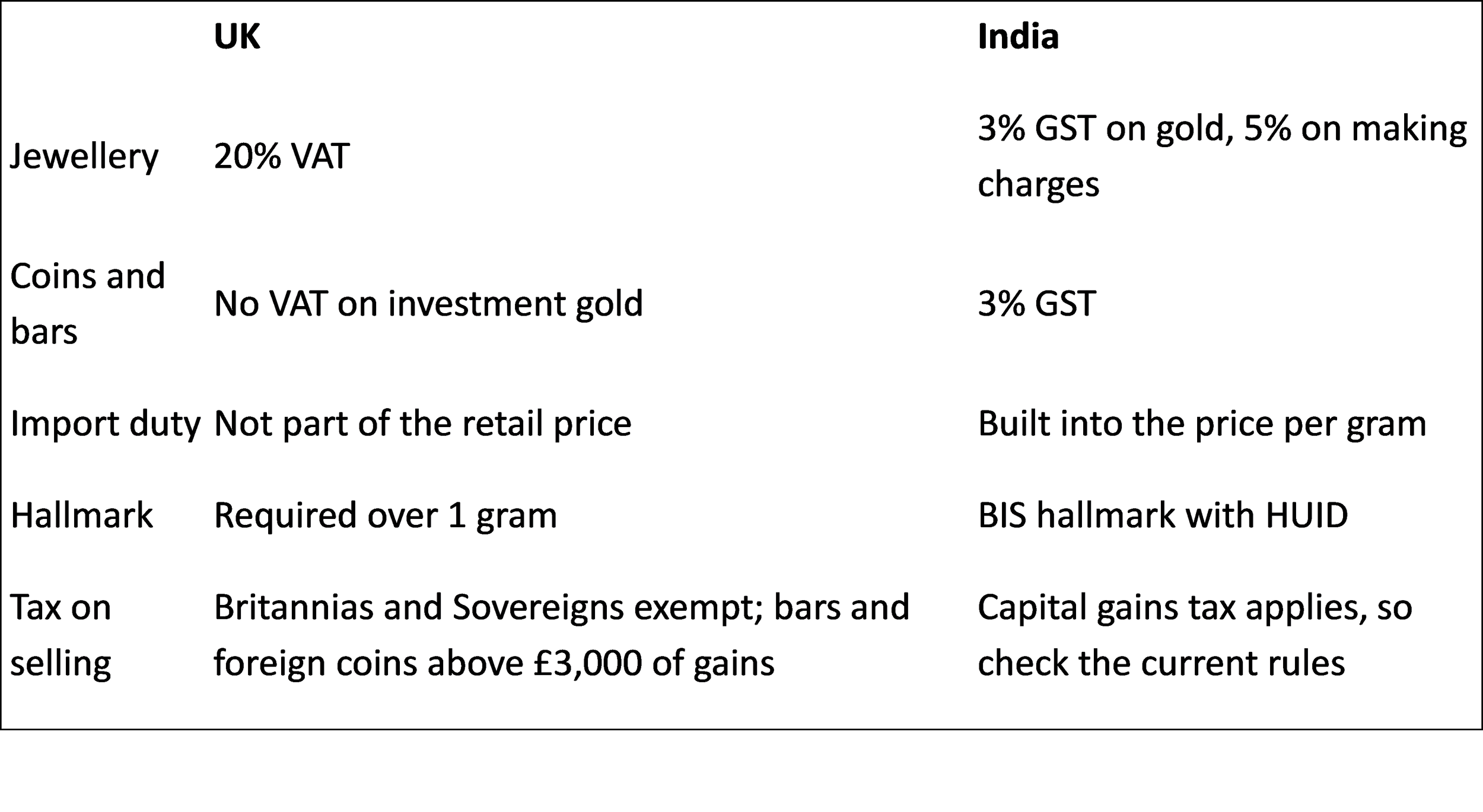
UK vs India Gold Price factors comparison
Look for the Gold Price Calculator for comparison
Two common traps
Comparing only the tax lines. The 20% VAT figure looks alarming next to 3%, but it ignores the import duty already inside the Indian price.
Assuming the allowance covers everything. It covers jewellery only, for eligible passengers, up to a weight limit. Coins, bars and anything over the limit are treated differently.
Before you buy
Festival and wedding seasons are busy, so allow time to compare sellers and for sizing, collection or delivery.
[ ] Decide which buyer you are
[ ] Get the all-in price per gram, in writing, from at least two sellers
[ ] Check the hallmark
[ ] Ask about making charges, buyback terms and returns
[ ] Keep the itemised invoice
[ ] If you're carrying it, check the allowance and the current duty rate
[ ] Think about insurance and where you'll keep it
Quick questions
Is gold cheaper in the UK or India? It depends on what you buy and what's included. Compare the all-in price per gram for the same purity.
What about gold ETFs and digital gold? They're investment products with different regulation and eligibility rules, and this guide doesn't cover them. Speak to a regulated adviser.
Will there be a gold cost calculator? Yes, we built a free one that puts UK and Indian costs side by side - here.
This article is general information based on published UK and Indian rules as of the date above. It is not financial, tax or legal advice. Rules, duty rates and allowances change, and your position depends on your circumstances. Check gov.uk and official Indian government sources before buying or travelling.